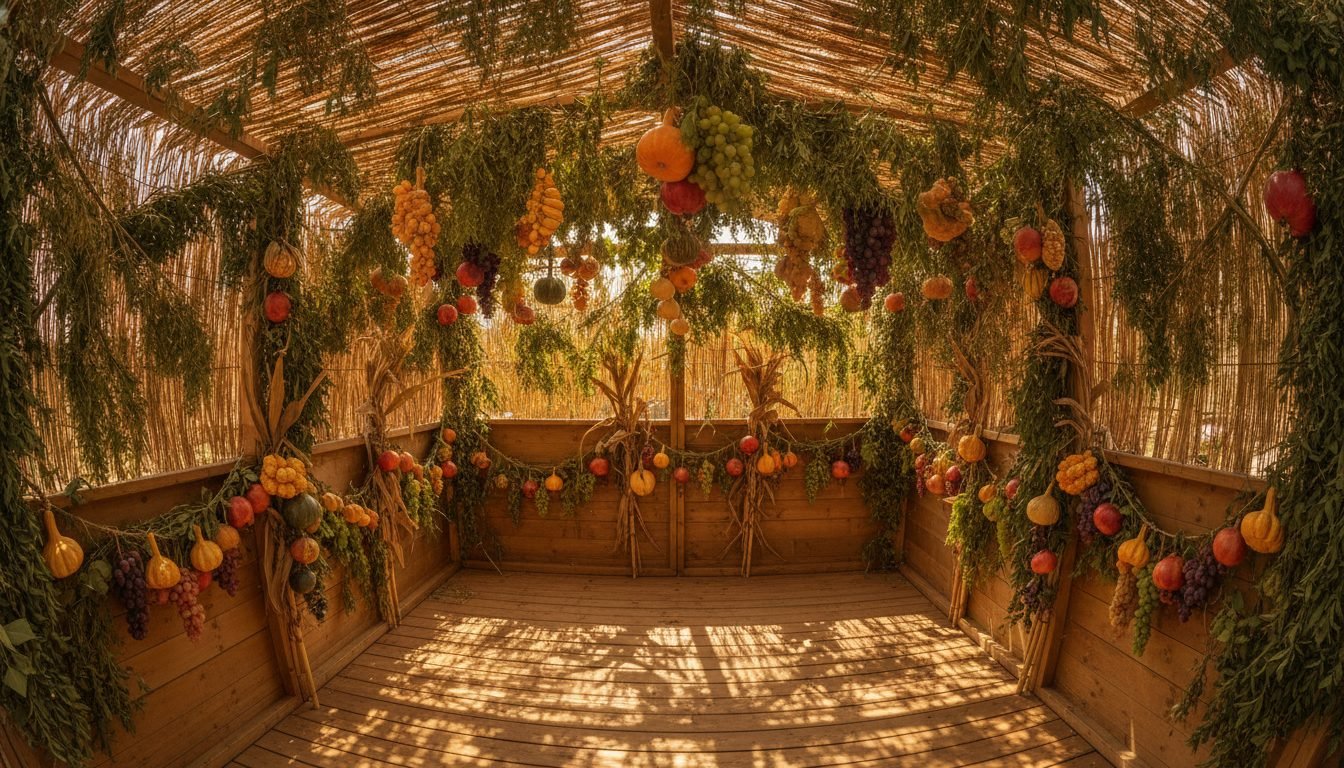
Seven days under the open sky
Sukkot (Hebrew סֻכּוֹת, “booths”) is observed from the 15th of Tishrei, five days after Yom Kippur, for seven days. Its central commandment is to dwell in the sukkah, a temporary booth under the open sky.
The booth recalls the forty years of wandering in the desert, when the people lived in temporary dwellings under the protection of Heaven. A fragile roof of branches teaches that true shelter is not in the strength of walls.
Sukkot is also a harvest festival, “the season of our rejoicing.” To the sukkah are added the four species, hospitality and thanks for the fruit of the land. The festival closes with Shemini Atzeret and Simchat Torah.
Sukkot in Azerbaijan
Azerbaijan is home to one of the world's oldest Jewish communities and a long tradition of interfaith tolerance. On Sukkot, booths are built in the courtyards of Baku and Quba, decorated with fruit and greenery, and the four species are blessed.
A special place belongs to Krasnaya Sloboda (Qırmızı Qəsəbə) near Quba — one of the few places in the world where Mountain Jews live compactly. There Sukkot is met by the whole community, with hospitality, ancient Juhuri melodies and the abundance of the autumn table.
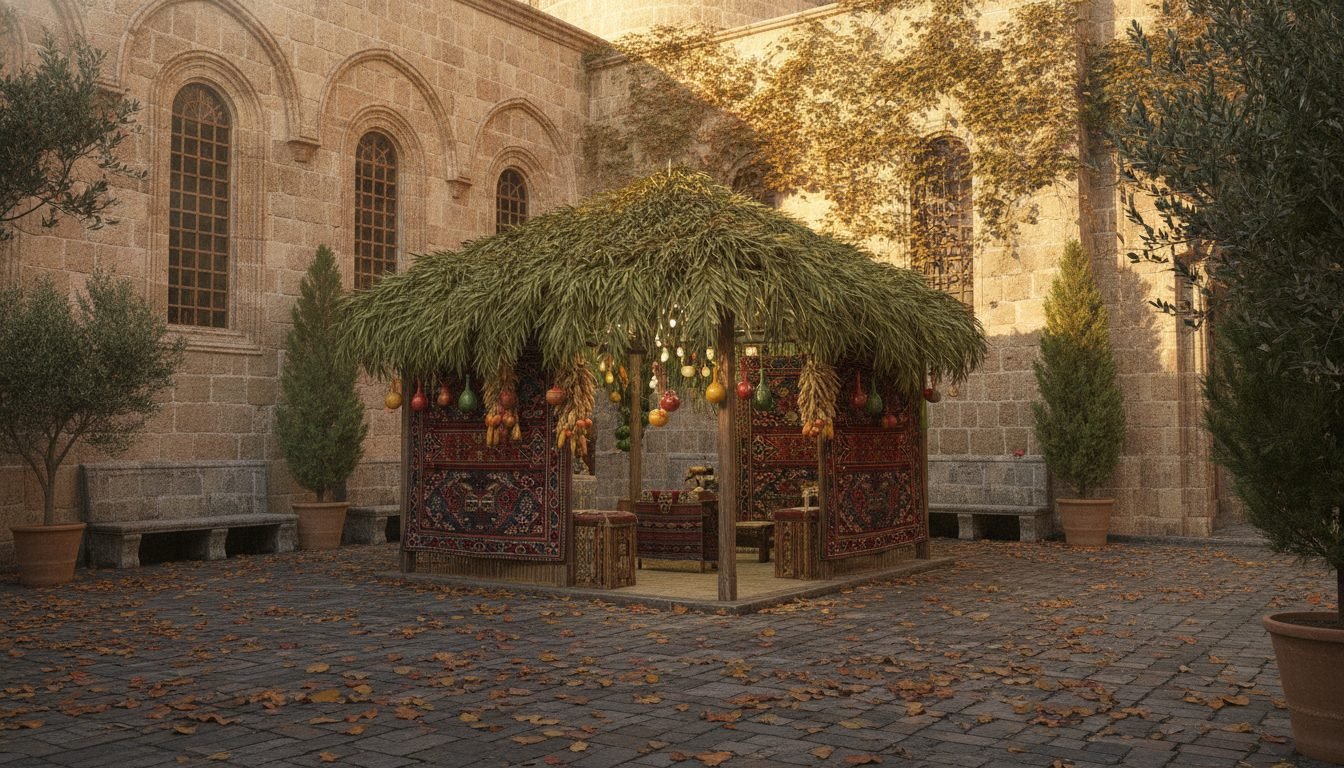
Enter the festival
Three sides of Sukkot — the booth and its customs, the four species, and the joy of harvest and Simchat Torah.




A harvest festival
“The season of our rejoicing” — seven days dwell in a booth and rejoice with all your household.
The festival in numbers
Sukkot begins on the 15th of Tishrei and lasts seven days; it is immediately followed by Shemini Atzeret and Simchat Torah. In the Gregorian calendar, usually late September or October.